Teaching Biodiversity: High School Earth Science key ideas, vocabulary and misconceptions
What High School students need to know about Biodiversity, the words they need and the mistakes to watch for. Then make an editable lesson, worksheet or study guide on it, standards-aligned and free to start.
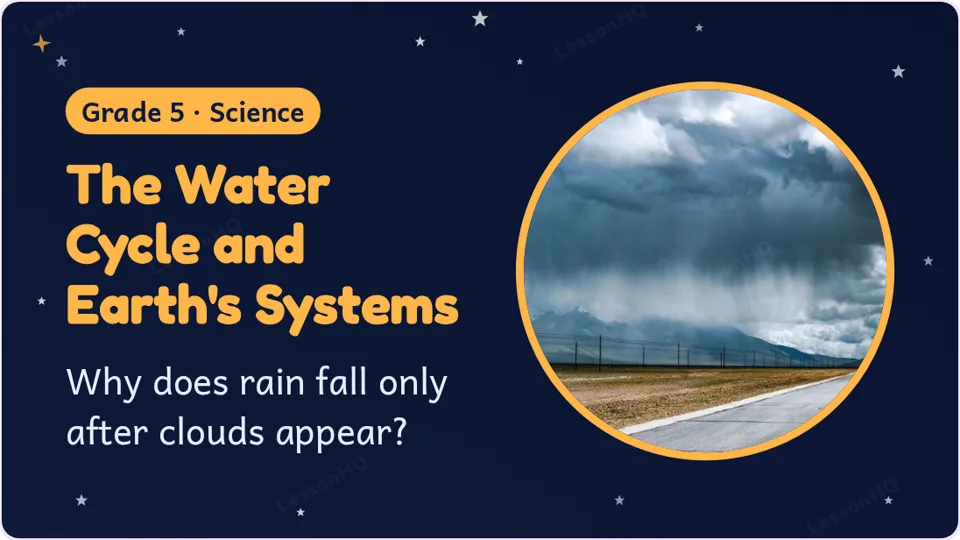
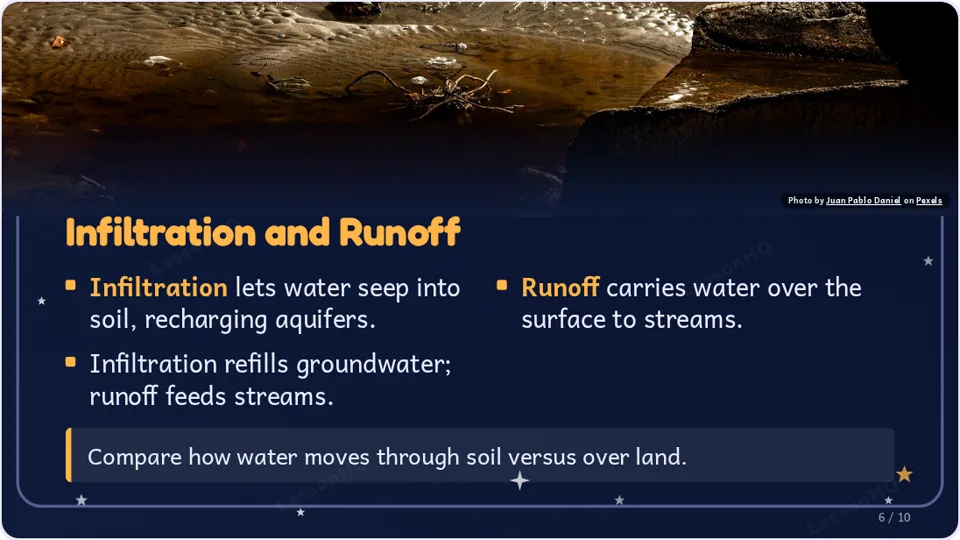
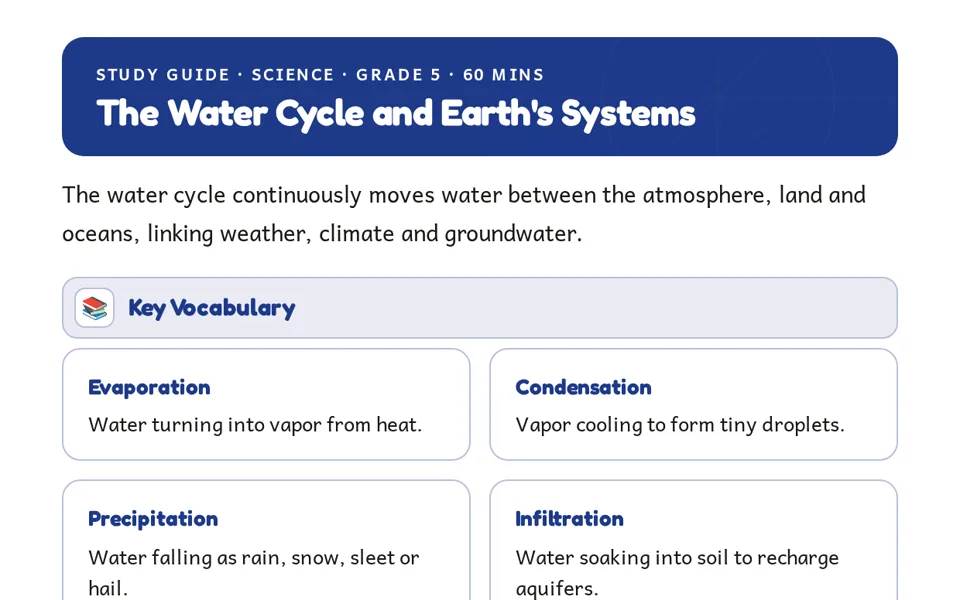
Teaching Biodiversity at High School
This unit examines biodiversity at the genetic, species, and ecosystem levels, why it matters for ecosystem services, and the main threats it faces such as habitat loss and invasive species. Students should be able to evaluate conservation strategies and explain how biodiversity supports ecosystem stability.
Key vocabulary
- species richness
- Number of different species found in an area
- genetic diversity
- Variety of genes within a species, helping populations adapt to change
- ecosystem services
- Benefits people gain from nature, such as pollination, clean water, and flood control
- invasive species
- Non-native species that spreads quickly and harms native species or ecosystems
- habitat fragmentation
- Breaking up a habitat into smaller, isolated patches, often by roads or development
Common misconceptions
- Students often think biodiversity just means the number of species, but it also includes genetic and ecosystem diversity.
- Many believe extinction only affects the lost species, but losing key species can disrupt food webs and ecosystem services.
- Students may think protecting one charismatic animal saves its ecosystem, yet effective conservation usually requires protecting whole habitats.
Biodiversity: key ideas, a teaching sequence and practice
In high school Earth science, students move from simply naming living things in a habitat to analyzing how variety within living systems affects how those systems function and respond to change. They look at biodiversity at three levels: genes within a species, species within a community, and ecosystems across a landscape. Then they connect that variety to the services ecosystems provide to people.
This builds on middle school work with food webs, populations, and the idea that organisms depend on their environment and on each other. At this stage students are expected to use evidence and simple quantitative reasoning, such as comparing species counts between sites, to explain why some ecosystems recover from disturbance better than others. They also weigh the trade-offs of human actions and conservation solutions, rather than only listing problems. The goal is for students to reason with data and construct arguments about what protects biodiversity and what harms it.
Key ideas
Measuring diversity
Richness counts the number of species, while evenness describes how evenly individuals are spread among them. Two communities can have the same richness but different diversity if one is dominated by a single species.
Why variety builds stability
A community with many species often has several organisms that can fill similar roles. If one declines because of disease or drought, others may keep processes like pollination, decomposition, or food production going.
Genetic variation and survival
Variation within a population gives natural selection something to act on when conditions change. A population with little genetic variation, such as one reduced to a few individuals, may have fewer members able to survive a new disease or climate shift.
Keystone species
A keystone species has an effect on its community far larger than its abundance suggests, as sea otters do by controlling sea urchins that graze kelp. Removing one can change the whole food web.
Major threats
Habitat loss and fragmentation, invasive species, overharvesting, pollution, and climate change all reduce biodiversity. These often act together, so a fragmented habitat is also more vulnerable to invaders and changing climate.
Island and area effects
Larger habitat areas generally support more species than small ones, and isolated patches lose species more easily because populations are small and cannot be rescued by migration. Wildlife corridors can reconnect patches.
Evaluating conservation
Strategies include protected areas, habitat restoration, wildlife corridors, laws limiting harvest or trade, and captive breeding. Students should compare them using criteria such as cost, effectiveness, effects on local people, and long-term sustainability.
A teaching sequence
- Open with a quick sorting activity using photos or a schoolyard sample so students notice that communities differ in both number and evenness of species.
- Teach the three levels of biodiversity with a concrete example for each, and have students compute a simple richness comparison between two sample sites.
- Use a food web model and remove one species, such as a keystone predator, so students trace the effects and explain why diversity supports stability.
- Have students investigate threats with short case studies (a fragmented forest, an invasive plant, an overfished area) and sort each by cause and effect.
- Finish by having students choose and defend a conservation strategy for one case, using criteria like cost, effectiveness, and community needs.
Practice questions with answers
Site A has 10 species with 90 percent of individuals being one species. Site B has 10 species with individuals spread evenly. Which is more diverse and why?
Site B. Richness is equal, but Site B has greater evenness, so its community is more diverse and less dependent on a single species.
Explain how low genetic diversity could threaten a small population even if it is protected from hunting.
With little variation, few individuals may have traits that help them survive a new disease or environmental change, so the whole population could decline together.
A highway splits a forest into two patches. Describe two ways this can reduce biodiversity.
Each patch has a smaller area and smaller populations that are more likely to die out. Animals cannot move between patches to find mates or resources, and the new edges can let invasive species in. Wildlife crossings or corridors can help.
Why can removing a keystone predator change an entire ecosystem?
The predator limits the numbers of its prey. Without it, prey can overpopulate and overconsume other species, which changes the food web and the habitat.
Give one ecosystem service provided by wetlands and explain what could happen if the wetland is drained.
Wetlands absorb floodwater and filter pollutants. If drained, nearby areas may flood more severely and water quality may decline.
Try it at home
Take a walk around your yard or a local park and have your student count and sketch the different kinds of plants and insects found in two spots, such as a mowed lawn and an unmowed edge, then discuss which is more diverse and why.
Standards this covers
- HS-LS2-7: Students evaluate and design solutions that reduce human impacts on biodiversity, such as corridors and habitat protection.
- HS-LS2-2: Students use quantitative comparisons to explain factors that affect biodiversity and populations in ecosystems.
- HS-LS4-6: Students test solutions that reduce adverse effects of human activity on biodiversity.
Make any resource on Biodiversity
Pick what you need - the AI builds it for High School Earth Science, then keeps everything consistent if you generate more.
Biodiversity lesson plans
Biodiversity worksheets
Biodiversity study guides
Biodiversity slides
Biodiversity test prep & review
Biodiversity activities
Biodiversity - FAQ
What High School Earth Science resources can I make for Biodiversity?
A full lesson on Biodiversity - slides, a lesson plan, a worksheet, a study guide, retrieval practice and more - each generated in about 60 seconds and aligned to US state standards for High School.
Are the Biodiversity resources editable?
Yes. Slides open in Google Slides or PowerPoint and documents open in Word or Google Docs, or save as a PDF - fully editable and yours to keep.
Is it pitched at the right level for High School?
Yes - every resource on Biodiversity is written for Grades 9-12 (ages 14-18): rigorous lessons with analysis and evidence, aligned to state standards and AP.
Is it free?
You can start free with no credit card. Generate a Biodiversity lesson and see the quality for yourself.
Aligned to your state's standards
Biodiversity resources map to your state's standards and tests, not a generic template.
- Texas
- California
- Florida
- New York
- Virginia
- Georgia
- Pennsylvania
- Tennessee
- North Carolina
- Indiana
- Oklahoma
- South Carolina
- Arizona
- Nebraska
- Minnesota
- Alaska
- Ohio
- Michigan
- Massachusetts
- Washington
- Colorado
- Maryland
- Missouri
- Wisconsin
- Alabama
- Louisiana
- Kentucky
- Utah
- Iowa
- Kansas
- Mississippi
- Idaho
- West Virginia
- Illinois
- New Jersey
- Connecticut
- Oregon
- Nevada
- New Mexico
- Arkansas
- Montana
- Hawaii
- Maine
- New Hampshire
- Vermont
- Rhode Island
- Delaware
- Wyoming
- North Dakota
- South Dakota
- District of Columbia
Teach Biodiversity tomorrow.
A full High School Earth Science lesson pack in 60 seconds - free to start, no credit card.