Teaching Air Pollution: High School Earth Science key ideas, vocabulary and misconceptions
What High School students need to know about Air Pollution, the words they need and the mistakes to watch for. Then make an editable lesson, worksheet or study guide on it, standards-aligned and free to start.

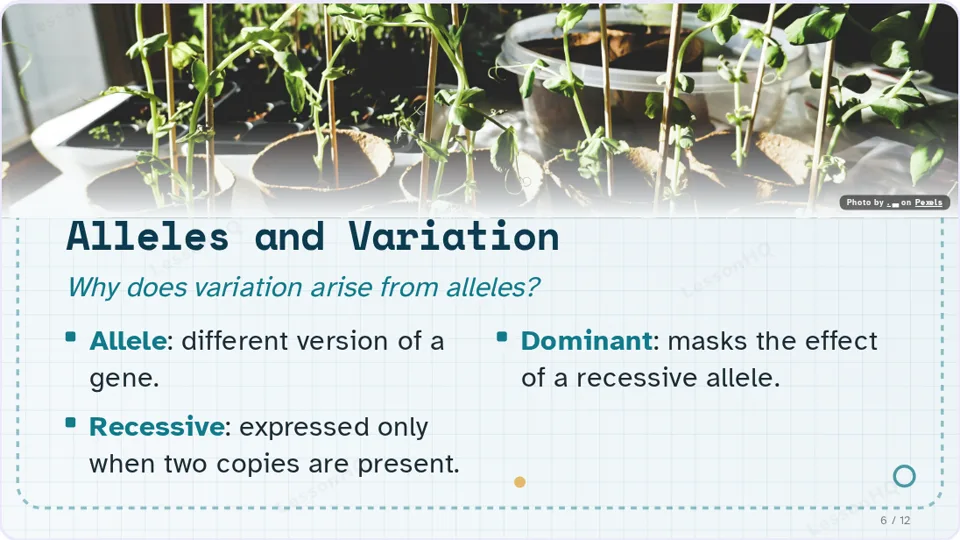
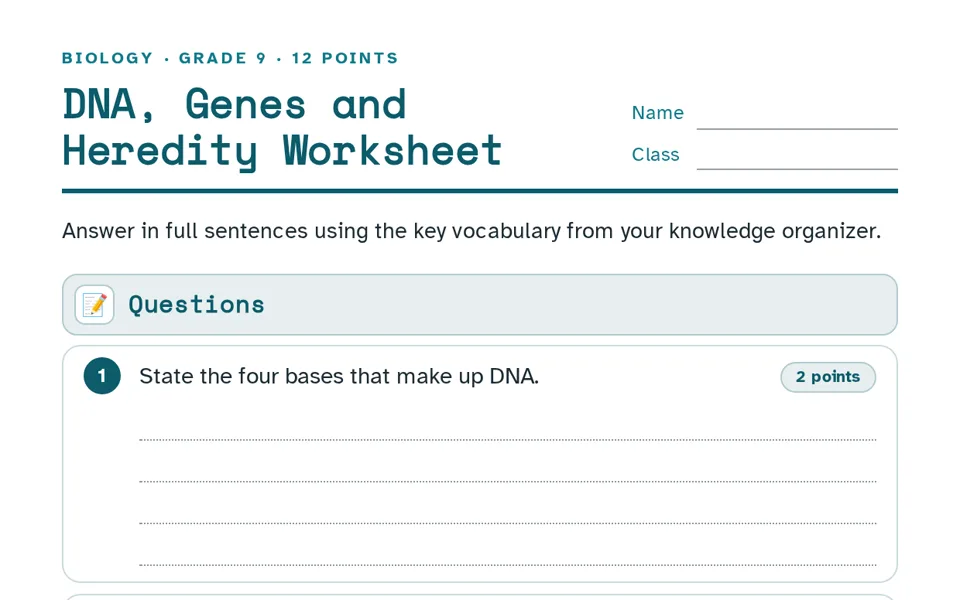
Teaching Air Pollution at High School
This unit examines major air pollutants, their sources, and effects on health and the environment, including smog, acid deposition, and indoor air pollution. Students should be able to distinguish primary from secondary pollutants, explain how temperature inversions trap pollution, and evaluate methods for reducing emissions.
Key vocabulary
- primary pollutant
- Pollutant released directly from a source, such as carbon monoxide from car exhaust
- secondary pollutant
- Pollutant formed when primary pollutants react in the atmosphere, such as ground-level ozone
- photochemical smog
- Brownish haze formed when sunlight reacts with nitrogen oxides and volatile organic compounds
- temperature inversion
- Warm air layer above cooler air that traps pollutants near the ground
- acid deposition
- Acidic rain, snow, or particles formed from sulfur and nitrogen oxides
Common misconceptions
- Students often think all ozone is harmful, but stratospheric ozone protects us from UV radiation while ground-level ozone is a harmful pollutant.
- Many believe air pollution is only an outdoor problem, but indoor air can contain harmful pollutants like radon and smoke.
- Students may confuse air pollution and climate change, but some pollutants harm health locally while greenhouse gases affect global climate.
Air Pollution: key ideas, a teaching sequence and practice
In high school Earth science, air pollution moves beyond the idea that smoke and exhaust are simply bad. Students learn to sort pollutants by what they are, where they come from, and how they change once they enter the atmosphere. They connect combustion of fossil fuels to emissions of carbon monoxide, sulfur dioxide, nitrogen oxides, particulates, and volatile organic compounds, and they trace how some of these become smog or acid deposition.
This builds on earlier work with the layers of the atmosphere, chemical reactions, and the water cycle. Students also apply weather concepts such as air pressure, temperature layers, and wind to explain why pollution builds up in some places and times but not others. The unit ends with evaluation: students weigh technologies and policies for cutting emissions, considering benefits, costs, and trade-offs.
Key ideas
Sources of pollutants
Burning fossil fuels in vehicles, power plants, and industry releases most major pollutants. Natural sources such as wildfires, volcanoes, and dust also add pollutants to the air.
Criteria pollutants
Common regulated pollutants include carbon monoxide, sulfur dioxide, nitrogen oxides, ground-level ozone, particulate matter, and lead. Each has different sources and different health effects.
Formation of photochemical smog
Nitrogen oxides and volatile organic compounds react in sunlight to form ozone and other irritants. Smog is therefore worst on sunny, warm days with heavy traffic.
Acid deposition chemistry
Sulfur dioxide and nitrogen oxides react with water, oxygen, and other chemicals in the air to form sulfuric and nitric acids. These fall as wet deposition (rain, snow, fog) or dry deposition (particles and gases), and can lower the pH of lakes and soils and damage buildings and statues made of limestone or marble.
Weather and geography control buildup
In a temperature inversion, a warm layer sits over cooler surface air, which stops vertical mixing. Mountains surrounding a valley can also block wind, so pollutants stay concentrated.
Health and ecosystem effects
Fine particles and ozone irritate the lungs and worsen asthma and other breathing problems. Carbon monoxide reduces the blood's ability to carry oxygen. Acid deposition harms aquatic life and forests.
Reducing emissions
Strategies include catalytic converters, scrubbers on smokestacks, cleaner fuels, renewable energy, public transit, and regulation such as the Clean Air Act. Each option has costs and trade-offs that students should compare.
A teaching sequence
- Start with a quick sort of pollutant examples into primary and secondary, so students activate prior knowledge and reveal gaps.
- Have students map sources of each major pollutant and write the key reactions in words, linking combustion chemistry to atmospheric products.
- Use a jar or aquarium model with a cool bottom layer and warm top layer (for example, ice water under a warm lamp setup with a bit of incense smoke) so students observe how an inversion traps smoke.
- Give students a simple pH activity or data table on rain or lake water so they can connect acid deposition to measurable change in acidity.
- Finish with a short written evaluation where students choose one emission-reduction method and defend it, naming at least one benefit and one limitation.
Practice questions with answers
Classify each as primary or secondary: carbon monoxide from a tailpipe, ground-level ozone, soot from a diesel truck.
Carbon monoxide and soot are primary because they come directly from the source. Ground-level ozone is secondary because it forms from reactions of other pollutants in sunlight.
Why does smog often become worst in the afternoon of a sunny day in a city with heavy morning traffic?
Morning traffic releases nitrogen oxides and volatile organic compounds. Sunlight drives the reactions that make ozone, so it builds up as the day goes on.
Explain how a temperature inversion makes air quality worse.
Warm air above cooler surface air prevents the surface air from rising and mixing. Pollutants stay trapped near the ground and concentrate.
How does burning coal lead to damage to a marble statue?
Coal often contains sulfur, which forms sulfur dioxide when burned. It reacts in the atmosphere to form sulfuric acid, which falls as acid deposition and dissolves marble.
Name one technology that reduces vehicle emissions and one limitation of it.
A catalytic converter changes carbon monoxide, nitrogen oxides, and unburned hydrocarbons into less harmful gases. It does not remove all pollutants and does not stop carbon dioxide emissions.
Try it at home
Look at your local daily air quality report together and talk about what might cause good or poor days. You can also check what household items, such as gas stoves, candles, or cleaning products, might affect indoor air and how opening windows or using a fan helps.
Standards this covers
- HS-ESS3-4: Students evaluate technological solutions such as catalytic converters and scrubbers that reduce the impact of human activities on air quality.
- HS-LS2-7: Students design and evaluate ways to reduce human impacts on the environment, including emissions that harm ecosystems.
Make any resource on Air Pollution
Pick what you need - the AI builds it for High School Earth Science, then keeps everything consistent if you generate more.
Air Pollution lesson plans
Air Pollution worksheets
Air Pollution study guides
Air Pollution slides
Air Pollution test prep & review
Air Pollution activities
Air Pollution - FAQ
What High School Earth Science resources can I make for Air Pollution?
A full lesson on Air Pollution - slides, a lesson plan, a worksheet, a study guide, retrieval practice and more - each generated in about 60 seconds and aligned to US state standards for High School.
Are the Air Pollution resources editable?
Yes. Slides open in Google Slides or PowerPoint and documents open in Word or Google Docs, or save as a PDF - fully editable and yours to keep.
Is it pitched at the right level for High School?
Yes - every resource on Air Pollution is written for Grades 9-12 (ages 14-18): rigorous lessons with analysis and evidence, aligned to state standards and AP.
Is it free?
You can start free with no credit card. Generate a Air Pollution lesson and see the quality for yourself.
Aligned to your state's standards
Air Pollution resources map to your state's standards and tests, not a generic template.
- Texas
- California
- Florida
- New York
- Virginia
- Georgia
- Pennsylvania
- Tennessee
- North Carolina
- Indiana
- Oklahoma
- South Carolina
- Arizona
- Nebraska
- Minnesota
- Alaska
- Ohio
- Michigan
- Massachusetts
- Washington
- Colorado
- Maryland
- Missouri
- Wisconsin
- Alabama
- Louisiana
- Kentucky
- Utah
- Iowa
- Kansas
- Mississippi
- Idaho
- West Virginia
- Illinois
- New Jersey
- Connecticut
- Oregon
- Nevada
- New Mexico
- Arkansas
- Montana
- Hawaii
- Maine
- New Hampshire
- Vermont
- Rhode Island
- Delaware
- Wyoming
- North Dakota
- South Dakota
- District of Columbia
Teach Air Pollution tomorrow.
A full High School Earth Science lesson pack in 60 seconds - free to start, no credit card.