Teaching The Cold War: High School World History key ideas, vocabulary and misconceptions
What High School students need to know about The Cold War, the words they need and the mistakes to watch for. Then make an editable lesson, worksheet or study guide on it, standards-aligned and free to start.
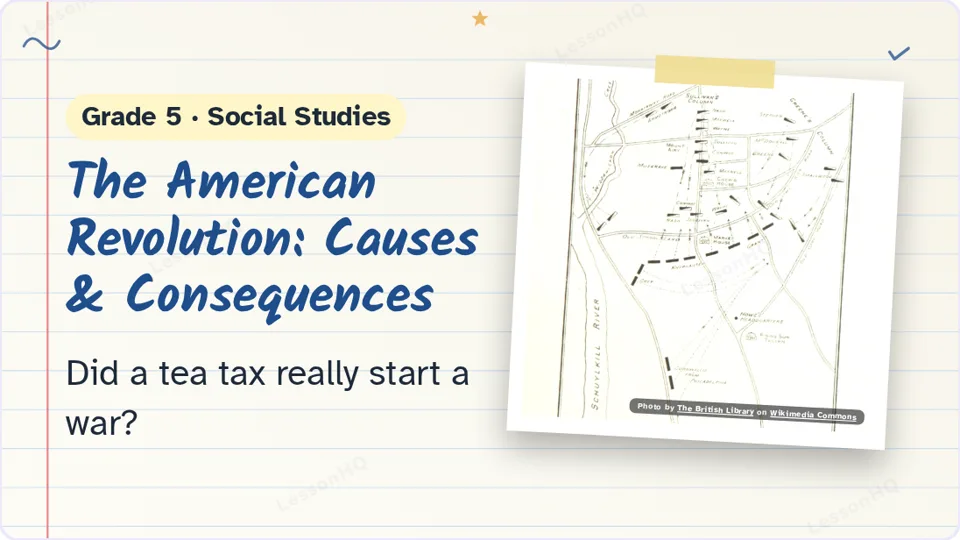
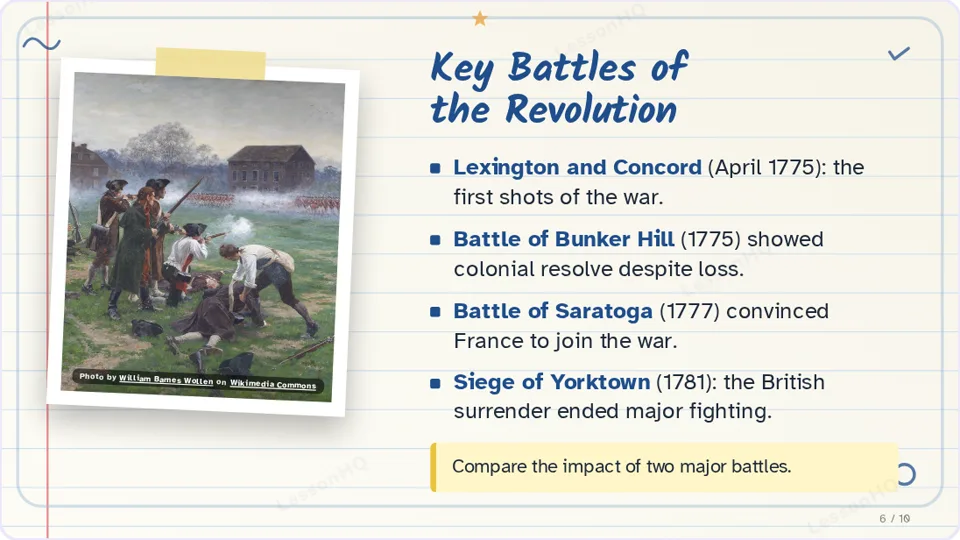
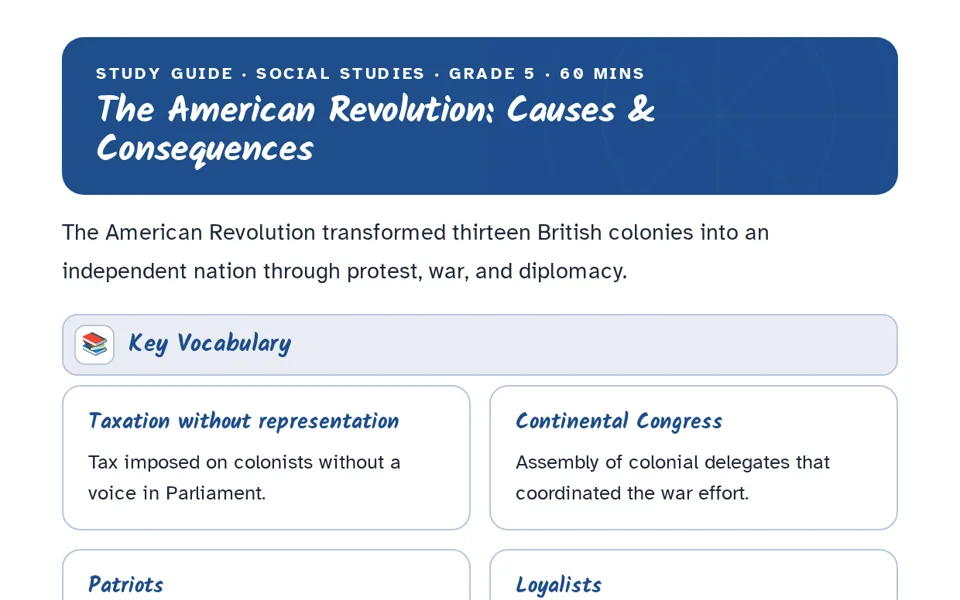
Teaching The Cold War at High School
This unit examines the global rivalry between the US-led and Soviet-led blocs from 1945 to 1991, including the division of Europe, nuclear crises, decolonization, and proxy conflicts in Asia, Africa, and Latin America. Students should be able to analyze how the Cold War shaped politics worldwide and evaluate why it ended.
Key vocabulary
- Iron Curtain
- Term for the political division of Europe between Soviet-controlled East and the democratic West
- proxy war
- Conflict where rival powers support opposing sides instead of fighting each other directly
- NATO
- Military alliance formed in 1949 by the US, Canada, and Western European nations
- Non-Aligned Movement
- Group of nations that chose not to formally join either Cold War bloc
- détente
- Period of eased tensions and arms control talks between the superpowers in the 1970s
Common misconceptions
- Students often think the Cold War only involved the US and USSR, but countries across Asia, Africa, and Latin America were deeply affected.
- Many believe the Cold War was "cold" everywhere, yet proxy wars in places like Korea, Vietnam, and Afghanistan caused enormous loss of life.
- Students may think the Cuban Missile Crisis was a one-sided win, but it ended through compromise, including a later US removal of missiles from Turkey.
The Cold War: key ideas, a teaching sequence and practice
In this topic, students move from the outcome of World War II to the long rivalry between the United States and the Soviet Union. They learn how wartime allies became opponents, how competing ideas about government and economics (liberal democracy and market capitalism versus one-party communist rule and state planning) shaped alliances, and how the rivalry played out in Europe, Asia, Africa, Latin America, and the Middle East.
The unit builds on earlier work on World War I, the Russian Revolution, the rise of totalitarian states, World War II, and the start of decolonization. Students are expected to do more than list events. They weigh causes and effects, compare how different people experienced the same events, and argue about why the Cold War ended when it did. Primary sources such as speeches, posters, and treaties give them practice judging perspective and purpose.
Key ideas
Origins in the end of World War II
Disagreements over the future of Eastern Europe, Germany, and postwar security, along with deep mistrust between the Soviet and Western governments, turned the wartime alliance into rivalry. Soviet control over much of Eastern Europe and Western fears of communist expansion hardened the division.
Containment and the Western response
The Truman Doctrine, the Marshall Plan, and the creation of NATO were part of a policy of containing Soviet influence. The Soviet Union answered with its own economic ties to Eastern Europe and, later, the Warsaw Pact.
Germany as the central flashpoint
Germany was divided into occupation zones and then into two states. The Berlin Blockade and airlift, and later the building of the Berlin Wall in 1961, showed how the conflict split a single city and its families.
Nuclear weapons and brinkmanship
Both sides built nuclear arsenals, and the arms race shaped military and foreign policy for decades. The Cuban Missile Crisis of 1962 brought the superpowers closest to nuclear war and was resolved through negotiation.
Decolonization and proxy wars
As colonies in Asia and Africa gained independence, both superpowers competed for influence there. Conflicts in Korea, Vietnam, Afghanistan, and elsewhere combined local causes, such as nationalism and civil conflict, with superpower involvement.
Détente and renewed tension
In the 1970s, arms control talks and diplomacy eased tensions for a time. Tension rose again after the Soviet invasion of Afghanistan in 1979 and during the early 1980s.
Why the Cold War ended
Historians point to several interacting causes: Soviet economic problems, the reforms of Mikhail Gorbachev, nationalist and reform movements in Eastern Europe, and the costs of the arms race. The Berlin Wall opened in 1989 and the Soviet Union dissolved in 1991.
A teaching sequence
- Start with a map of Europe in 1945 and again around 1949, and have students describe what changed and what questions the change raises.
- Teach containment through short excerpts from the Truman Doctrine and a Marshall Plan summary, and have students explain the goals behind each policy.
- Have students build a timeline of major crises (Berlin, Korea, Cuba, Vietnam, Afghanistan) and label each as direct confrontation, proxy war, or arms race.
- Assign small groups a region outside Europe and have them report how local leaders and movements, not just the superpowers, shaped events there.
- Close with a short written argument on which factor most explains the end of the Cold War, using at least two pieces of evidence and addressing one counterclaim.
Practice questions with answers
How did the Marshall Plan fit the policy of containment?
It gave economic aid to rebuild Western European economies, which was meant to reduce poverty and instability that communist movements might exploit and to strengthen ties with the United States.
Why was Berlin such a tense place in the early Cold War?
The city lay inside Soviet-occupied eastern Germany but was divided among the occupying powers. The Soviet blockade of the western sectors and the Western airlift in response made it a test of resolve for both sides.
Explain why the Korean War is called a proxy war.
Korea was divided between a Soviet-backed north and a US-backed south. The United States led UN forces defending the south, China sent troops to aid the north, and the Soviet Union supplied weapons and advisers, so the two superpowers never openly fought each other.
Give one way decolonization affected the Cold War.
Newly independent states became places where the US and USSR competed for allies. Some leaders took sides, and others joined the Non-Aligned Movement to stay independent.
Which is a stronger explanation for the Cold War's end: Soviet internal problems or outside pressure? Defend your choice.
Answers vary. A strong response takes a position, uses evidence such as Soviet economic difficulties, Gorbachev's reforms, or the arms race, and acknowledges that the causes interacted.
Try it at home
Ask your teen to explain one Cold War event at dinner as if briefing a family member, then look together at a world map to talk about where the major crises happened. Asking whether someone living in that place would tell the story the same way is a good follow-up question.
Standards this covers
- D2.HIS.14.9-12: Students analyze the multiple causes and effects of the Cold War's origins, crises, and end.
- D2.HIS.4.9-12: Students examine how leaders and ordinary people in different places and sides viewed the same Cold War events.
- D4.1.9-12: The closing argument asks students to make a claim with evidence and address a counterclaim about why the Cold War ended.
Make any resource on The Cold War
Pick what you need - the AI builds it for High School World History, then keeps everything consistent if you generate more.
The Cold War lesson plans
The Cold War worksheets
The Cold War study guides
The Cold War slides
The Cold War test prep & review
The Cold War activities
Ready-made High School World History resources
Finished resources from the LessonHQ Library, closest to The Cold War first.
- The Complex Causes of World War ILesson Plan · High School World History · $1.99
- 1914 Spark: Causes of World War ILesson Pack · High School World History · $3.99
- Causes of World War I Sub PlanSub Plan · High School World History · $1.99
- Causes of World War IWorksheet · High School World History · $1.99
- Causes of World War I - Knowledge CheckActivity Sheet · High School World History · $1.99
- Causes of World War IExit Ticket · High School World History · $0.99
The Cold War - FAQ
What High School World History resources can I make for The Cold War?
A full lesson on The Cold War - slides, a lesson plan, a worksheet, a study guide, retrieval practice and more - each generated in about 60 seconds and aligned to US state standards for High School.
Are the The Cold War resources editable?
Yes. Slides open in Google Slides or PowerPoint and documents open in Word or Google Docs, or save as a PDF - fully editable and yours to keep.
Is it pitched at the right level for High School?
Yes - every resource on The Cold War is written for Grades 9-12 (ages 14-18): rigorous lessons with analysis and evidence, aligned to state standards and AP.
Is it free?
You can start free with no credit card. Generate a The Cold War lesson and see the quality for yourself.
Aligned to your state's standards
The Cold War resources map to your state's standards and tests, not a generic template.
- Texas
- California
- Florida
- New York
- Virginia
- Georgia
- Pennsylvania
- Tennessee
- North Carolina
- Indiana
- Oklahoma
- South Carolina
- Arizona
- Nebraska
- Minnesota
- Alaska
- Ohio
- Michigan
- Massachusetts
- Washington
- Colorado
- Maryland
- Missouri
- Wisconsin
- Alabama
- Louisiana
- Kentucky
- Utah
- Iowa
- Kansas
- Mississippi
- Idaho
- West Virginia
- Illinois
- New Jersey
- Connecticut
- Oregon
- Nevada
- New Mexico
- Arkansas
- Montana
- Hawaii
- Maine
- New Hampshire
- Vermont
- Rhode Island
- Delaware
- Wyoming
- North Dakota
- South Dakota
- District of Columbia
Teach The Cold War tomorrow.
A full High School World History lesson pack in 60 seconds - free to start, no credit card.