Teaching Cell Communication: High School Biology key ideas, vocabulary and misconceptions
What High School students need to know about Cell Communication, the words they need and the mistakes to watch for. Then make an editable lesson, worksheet or study guide on it, standards-aligned and free to start.
Teaching Cell Communication at High School
This unit examines how cells send and receive signals, including types of signaling, receptor proteins, signal transduction pathways, and cellular responses. Students should be able to describe the three stages of cell signaling and explain how disruptions in signaling pathways can lead to disease.
Key vocabulary
- ligand
- Signaling molecule that binds to a specific receptor
- receptor
- Protein that recognizes and binds a specific signal molecule
- signal transduction
- Series of steps that converts a received signal into a cell response
- second messenger
- Small molecule, such as cyclic AMP, that relays a signal inside the cell
- phosphorylation cascade
- Chain of protein kinases each adding phosphate groups to activate the next protein
Common misconceptions
- Students often think signal molecules enter every cell, but many bind receptors on the surface and the message is relayed inside without the ligand entering.
- Many believe a signal affects all cells it reaches, but only cells with the matching receptor respond.
- Students may think the same signal always causes the same response, yet different cell types can respond differently to the same ligand.
Make any resource on Cell Communication
Pick what you need - the AI builds it for High School Biology, then keeps everything consistent if you generate more.
Cell Communication lesson plans
Cell Communication worksheets
Cell Communication study guides
Cell Communication slides
Cell Communication test prep & review
Cell Communication activities
Ready-made High School Biology resources
Finished resources from the LessonHQ Library, closest to Cell Communication first.
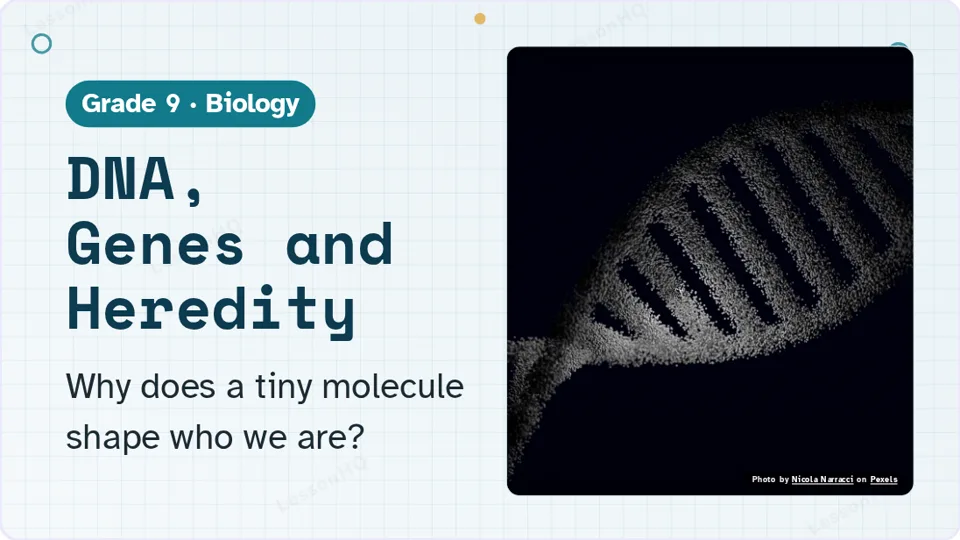
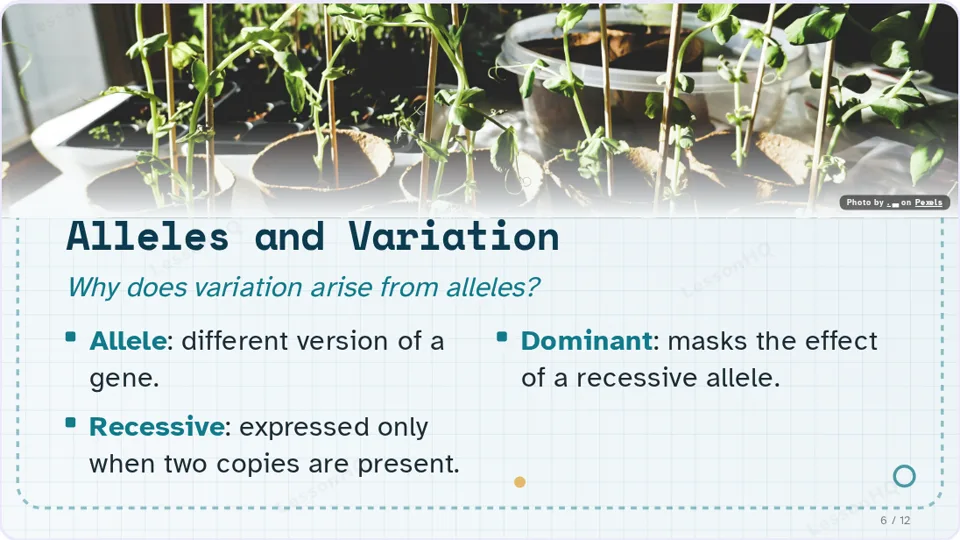
- DNA, Genes, and HereditySlide Deck · High School Biology · $2.49
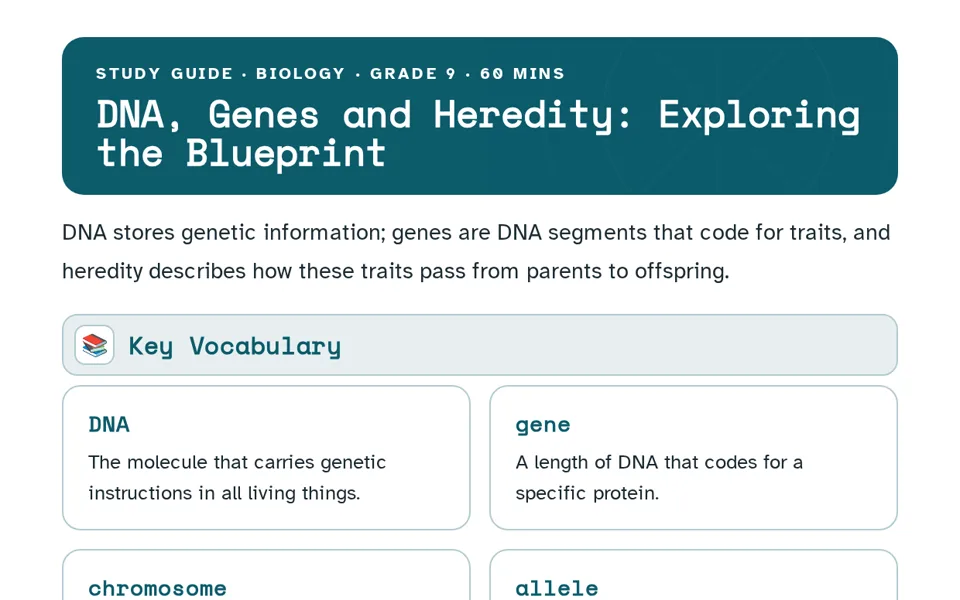
- DNA, Genes, and HeredityStudy Guide · High School Biology · $1.49
- DNA, Genes, and HeredityExit Ticket · High School Biology · $0.99
- DNA, Genes and Heredity Sub PlanSub Plan · High School Biology · $1.99
- DNA, Genes and Heredity: Exploring the BlueprintLesson Pack · High School Biology · $3.99
- DNA, Genes and HeredityLesson Plan · High School Biology · $1.99
Cell Communication - FAQ
What High School Biology resources can I make for Cell Communication?
A full lesson on Cell Communication - slides, a lesson plan, a worksheet, a study guide, retrieval practice and more - each generated in about 60 seconds and aligned to US state standards for High School.
Are the Cell Communication resources editable?
Yes. Slides open in Google Slides or PowerPoint and documents open in Word or Google Docs, or save as a PDF - fully editable and yours to keep.
Is it pitched at the right level for High School?
Yes - every resource on Cell Communication is written for Grades 9-12 (ages 14-18): rigorous lessons with analysis and evidence, aligned to state standards and AP.
Is it free?
You can start free with no credit card. Generate a Cell Communication lesson and see the quality for yourself.
Aligned to your state's standards
Cell Communication resources map to your state's standards and tests, not a generic template.
- Texas
- California
- Florida
- New York
- Virginia
- Georgia
- Pennsylvania
- Tennessee
- North Carolina
- Indiana
- Oklahoma
- South Carolina
- Arizona
- Nebraska
- Minnesota
- Alaska
- Ohio
- Michigan
- Massachusetts
- Washington
- Colorado
- Maryland
- Missouri
- Wisconsin
- Alabama
- Louisiana
- Kentucky
- Utah
- Iowa
- Kansas
- Mississippi
- Idaho
- West Virginia
- Illinois
- New Jersey
- Connecticut
- Oregon
- Nevada
- New Mexico
- Arkansas
- Montana
- Hawaii
- Maine
- New Hampshire
- Vermont
- Rhode Island
- Delaware
- Wyoming
- North Dakota
- South Dakota
- District of Columbia
Teach Cell Communication tomorrow.
A full High School Biology lesson pack in 60 seconds - free to start, no credit card.