Teaching Weather and Seasons: Elementary Earth Science key ideas, vocabulary and misconceptions
What Elementary students need to know about Weather and Seasons, the words they need and the mistakes to watch for. Then make an editable lesson, worksheet or study guide on it, standards-aligned and free to start.
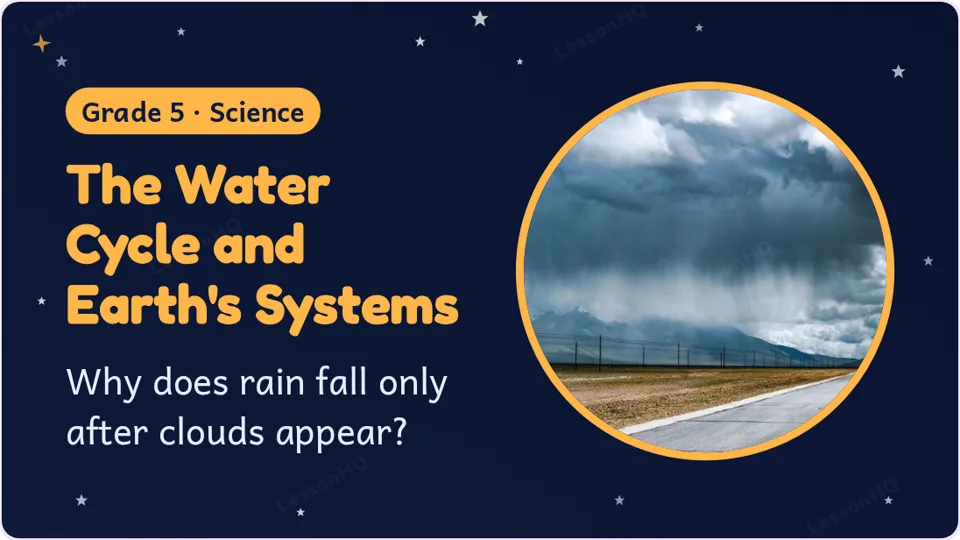
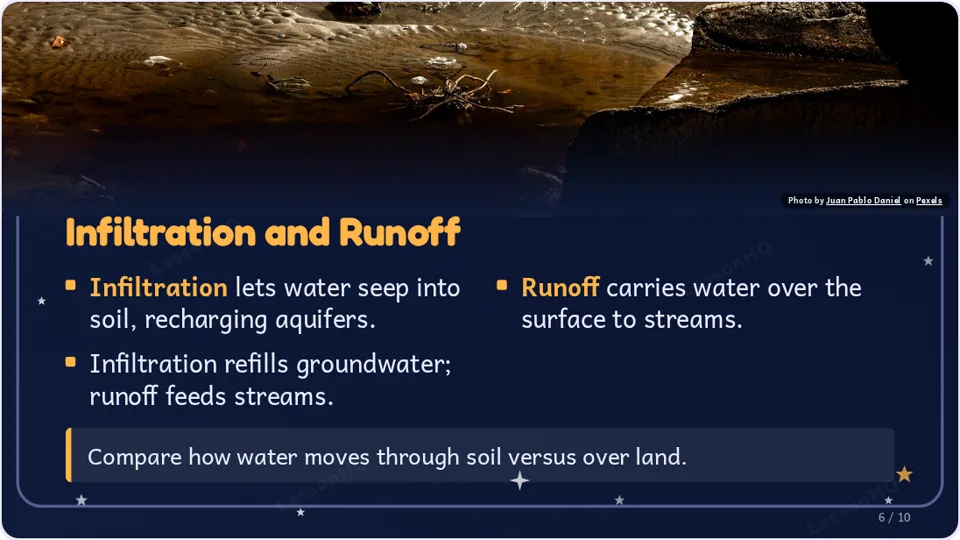
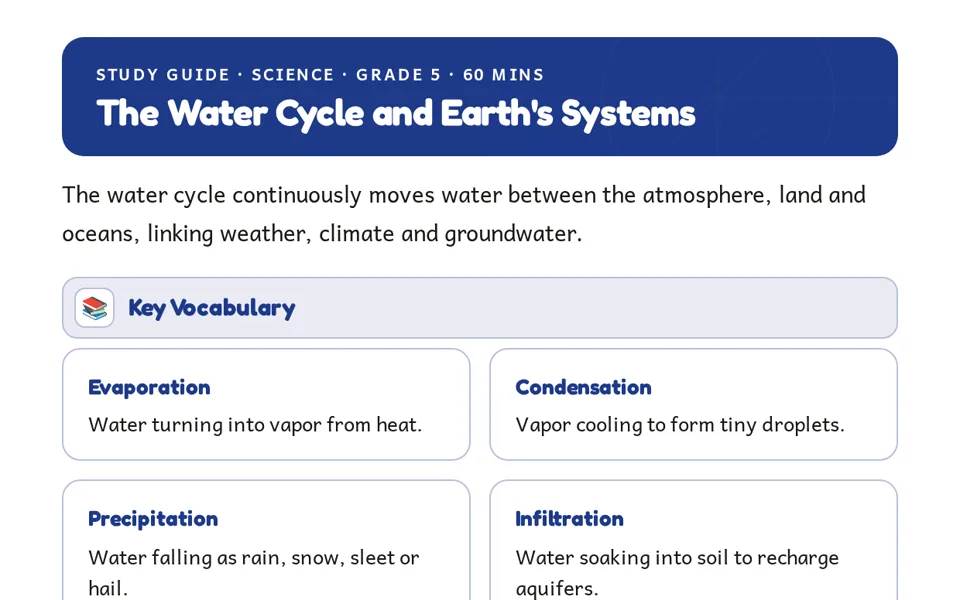
Teaching Weather and Seasons at Elementary
Students learn how to observe and describe weather using temperature, wind, clouds, and precipitation, and explore the patterns of the four seasons. By the end, students should be able to record weather with simple tools and explain how the weather and daylight change from season to season.
Key vocabulary
- weather
- What the air outside is like each day, such as sunny, rainy, or windy
- temperature
- How hot or cold something is, measured with a thermometer
- precipitation
- Water falling from clouds, such as rain, snow, sleet, or hail
- season
- One of the four parts of the year: spring, summer, fall, and winter
- forecast
- A prediction of what the weather will be like soon
Common misconceptions
- Students often think summer is hot because Earth is closer to the Sun, but it is because of the way Earth is tilted.
- Many believe clouds are made of smoke or cotton, but clouds are made of tiny drops of water or bits of ice.
- Students may think weather is the same everywhere at once, but it can be sunny in one place and rainy in another on the same day.
Weather and Seasons: key ideas, a teaching sequence and practice
In the elementary grades, students move from noticing the weather to measuring and recording it. Younger students describe sunny, cloudy, windy, rainy, and snowy days in their own words and talk about what to wear. Older students use tools such as thermometers, rain gauges, and wind vanes, and they organize their data in tables and graphs.
This topic builds on early experience with the sky, the Sun, and the outdoors. Students begin to see that weather changes from day to day but follows patterns over a season. They learn that the four seasons come with changes in temperature, daylight, and the plants and animals around them. By the upper grades, students use weeks of recorded data to describe what weather is typical for a time of year and to explain why a forecast is useful for planning and staying safe.
Key ideas
Weather is described with measurements
Weather can be described by temperature, wind speed and direction, cloud cover, and precipitation. A thermometer measures temperature, a rain gauge measures how much rain fell, and a wind vane shows which way the wind is blowing.
Weather changes from day to day
The weather today may be different from yesterday. Students record it each day so they can compare days and see change over time.
Patterns appear over time
After weeks of records, students notice patterns. Winter days are usually colder than summer days in most places, and some seasons are rainier than others. These patterns help us describe what weather to expect.
Clouds give clues
Puffy white clouds often appear on fair days. Thick gray clouds that cover the whole sky often bring rain or snow. Tall, dark clouds can bring thunderstorms.
The seasons follow a yearly cycle
Spring, summer, fall, and winter repeat in the same order every year. Each has typical temperatures, weather, and changes in plants and animal behavior, such as leaves changing color or animals growing thicker fur.
Daylight changes with the seasons
In most of the US, summer has more hours of daylight and winter has fewer. Longer days give the Sun more time to warm the ground and air, which is part of why summer is warmer.
Forecasts help us prepare
Forecasts use observations and measurements to predict the weather. People use them to decide what to wear, plan activities, and get ready for severe weather such as storms.
A teaching sequence
- Begin with a class weather walk and talk, where students observe the sky, wind, and temperature and describe them with weather words.
- Introduce a thermometer, rain gauge, and wind vane, and have students practice reading each one so they can make measurements instead of guesses.
- Set up a daily weather chart or calendar where students record conditions for several weeks and then look for patterns in their data.
- Have students sort pictures or sentences by season and discuss how temperature, daylight hours, plants, and animals change through the year.
- Close by having students compare a forecast with what actually happened and use it to decide what to wear or plan for the next day.
Practice questions with answers
Name three things you can measure or observe to describe the weather.
Temperature, wind, clouds, and precipitation all work. For example: it is 45 degrees, the wind is light, and the sky is cloudy.
Which tool would you use to find out how much rain fell during a storm?
A rain gauge.
List the four seasons in order, starting with spring.
Spring, summer, fall, winter.
How do the hours of daylight in summer compare with winter in most of the US?
Summer has more hours of daylight and winter has fewer.
A class records the high temperature every day for a month and sees the numbers slowly getting lower. What season might be coming, and how do you know?
Fall or winter might be coming, because the temperatures are dropping, which is a pattern seen as the seasons get colder.
Try it at home
Look at the sky and a thermometer together each morning, and ask your child to describe the weather and choose what to wear. Keep a simple chart on the refrigerator, and notice when the Sun rises and sets over the weeks.
Standards this covers
- K-ESS2-1: Students share observations of local weather and describe patterns over time.
- 3-ESS2-1: Students record weather data in tables and graphs to describe typical conditions for a season.
- 1-ESS1-2: Students relate the amount of daylight to the time of year.
Make any resource on Weather and Seasons
Pick what you need - the AI builds it for Elementary Earth Science, then keeps everything consistent if you generate more.
Weather and Seasons lesson plans
Weather and Seasons worksheets
Weather and Seasons study guides
Weather and Seasons slides
Weather and Seasons test prep & review
Weather and Seasons activities
Weather and Seasons - FAQ
What Elementary Earth Science resources can I make for Weather and Seasons?
A full lesson on Weather and Seasons - slides, a lesson plan, a worksheet, a study guide, retrieval practice and more - each generated in about 60 seconds and aligned to US state standards for Elementary.
Are the Weather and Seasons resources editable?
Yes. Slides open in Google Slides or PowerPoint and documents open in Word or Google Docs, or save as a PDF - fully editable and yours to keep.
Is it pitched at the right level for Elementary?
Yes - every resource on Weather and Seasons is written for Grades K-5 (ages 5-11): clear, concrete tasks with scaffolding and vocabulary support, aligned to Common Core.
Is it free?
You can start free with no credit card. Generate a Weather and Seasons lesson and see the quality for yourself.
Aligned to your state's standards
Weather and Seasons resources map to your state's standards and tests, not a generic template.
- Texas
- California
- Florida
- New York
- Virginia
- Georgia
- Pennsylvania
- Tennessee
- North Carolina
- Indiana
- Oklahoma
- South Carolina
- Arizona
- Nebraska
- Minnesota
- Alaska
- Ohio
- Michigan
- Massachusetts
- Washington
- Colorado
- Maryland
- Missouri
- Wisconsin
- Alabama
- Louisiana
- Kentucky
- Utah
- Iowa
- Kansas
- Mississippi
- Idaho
- West Virginia
- Illinois
- New Jersey
- Connecticut
- Oregon
- Nevada
- New Mexico
- Arkansas
- Montana
- Hawaii
- Maine
- New Hampshire
- Vermont
- Rhode Island
- Delaware
- Wyoming
- North Dakota
- South Dakota
- District of Columbia
Teach Weather and Seasons tomorrow.
A full Elementary Earth Science lesson pack in 60 seconds - free to start, no credit card.