Memorial Day lesson ideas and resources
Respectful Memorial Day lesson plans for Pre-K to 12th grade: why we remember those who died in military service, the history of Decoration Day and how communities honor them. Every idea below is one click from ready-made slides.
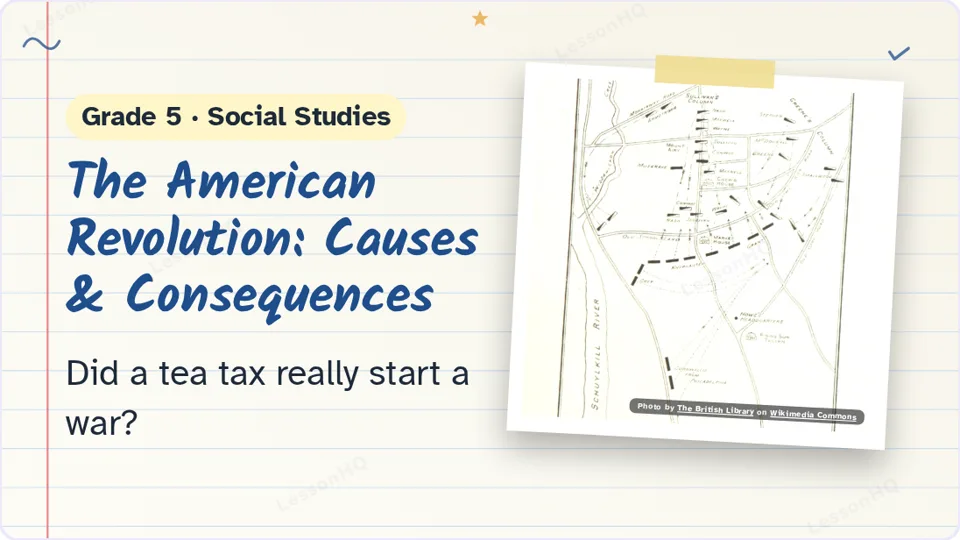
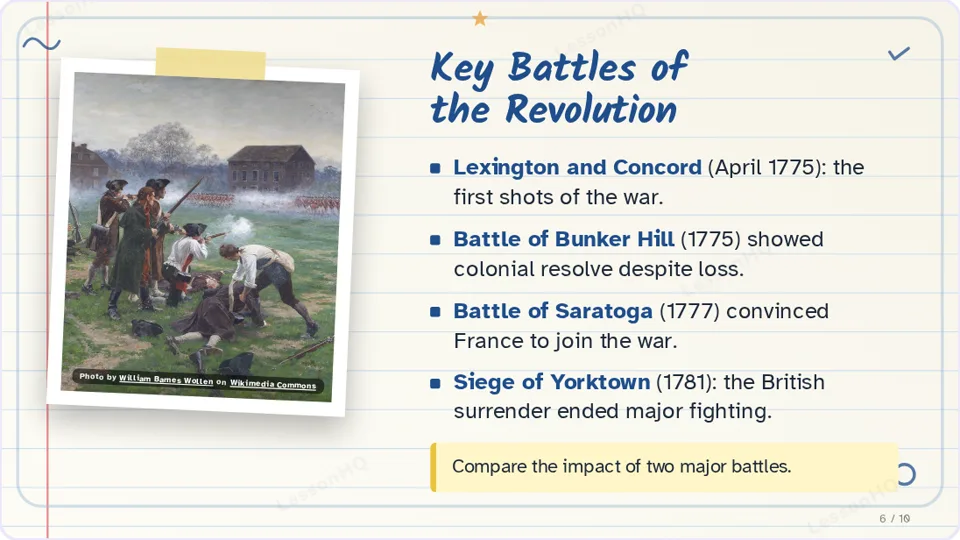
Memorial Day is the last Monday of May, a federal holiday. Schools are usually closed, so lessons happen in the days before. A National Moment of Remembrance is observed at 3 p.m. local time.
Planning Memorial Day in school
Teach in the week before the holiday weekend. Find out whether your community holds a Memorial Day ceremony or parade, and whether local cemeteries welcome volunteers to place flags. Be aware of students with family members who have died in service or who are currently deployed, and keep reflection personal and optional.
Most teachers start planning 2 to 6 weeks ahead. Pick an idea for your grade below and press Slides: the generator opens with the topic, grade and subject filled in, so you only check the options and press Generate.
Why Memorial Day matters
Memorial Day honors the men and women who died while serving in the US armed forces. It began after the Civil War, which took more American lives than any other conflict. Communities in both the North and the South decorated soldiers' graves with flowers, and the day was first widely known as Decoration Day.
Many towns claim to have held the first observance. One of the earliest documented was in Charleston, South Carolina, in May 1865, when formerly enslaved people honored Union soldiers who had died in a prison camp there. In 1868 General John A. Logan called for a national Decoration Day on May 30, and the Uniform Monday Holiday Act, which took effect in 1971, moved the federal holiday to the last Monday in May.
Students often confuse Memorial Day with Veterans Day. Memorial Day remembers those who died in service, while Veterans Day in November thanks everyone who has served. Teaching the difference, and the meaning behind the long weekend, helps students understand service, sacrifice and how communities remember.
Memorial Day lesson ideas by grade
Every idea opens a generator pre-filled for that age group. Slides works without an account; worksheets and full lesson packs use a free account.
Memorial Day: Pre-K and Kindergarten (ages 4-6)
Keep it very simple: Memorial Day is a day when we remember people who were brave and helped our country. Focus on flags, flowers and quiet remembering, not on war.
Remembering people
Talk about how we remember people who are special to us, such as with pictures, flowers and stories, and why remembering is important.
Flowers for remembering
Make paper flowers or poppies and learn that people place flowers to remember others.
Stars and stripes counting
Count the stripes on the flag, sort red and white stripes and count stars in groups.
Memorial Day: Grades 1-2 (ages 6-8)
Students can learn what Memorial Day is for and how it is different from other holidays, with a focus on respect and remembering.
What is Memorial Day?
Read a simple text about Memorial Day and Decoration Day, then make a page explaining what the day is for.
Symbols of remembrance
Learn about symbols such as the flag at half-staff, poppies and wreaths, and match each symbol to its meaning.
A thank-you card for military families
Write a short card thanking military families for their service and sacrifice, to share through a local group.
Memorial Day: Grades 3-5 (ages 8-11)
Students can learn the history of Decoration Day, compare Memorial Day with Veterans Day and explore local memorials.
From Decoration Day to Memorial Day
Create a timeline from the Civil War and the first Decoration Days to the 1971 change to the last Monday in May.
Memorial Day or Veterans Day?
Compare the two holidays in a Venn diagram, then write a short guide for younger students.
Our local memorial
Visit or research a local war memorial, record what it shows and who it honors, and present findings.
The red poppy
Learn how Moina Michael was inspired by the poem 'In Flanders Fields' to make the red poppy a symbol of remembrance.
Memorial Day: Grades 6-8 / middle school (ages 11-14)
Middle schoolers can analyze primary sources from the Civil War and later conflicts, and consider how and why we remember.
The Civil War and the cost of war
Use primary sources and data on Civil War casualties to understand the scale of loss and why communities created Decoration Day.
The Gettysburg Address
Analyze Lincoln's Gettysburg Address, its purpose and language, and how it honors those who died.
Designing a memorial
Study how memorials like the Vietnam Veterans Memorial communicate meaning, then design a respectful memorial with a written rationale.
Memorial Day: Grades 9-12 / high school (ages 14-18)
High school students can examine memory, history and national identity, and the many communities whose service has been recognized at different times.
Contested origins of Memorial Day
Evaluate evidence for different claims to the first Memorial Day, including Charleston in 1865 and Waterloo, New York, and what each claim says about memory.
Recognizing overlooked service
Research groups whose service was recognized late, such as Black soldiers in World War I or Japanese American soldiers in World War II.
War poetry
Compare poems about loss and remembrance from different American wars, analyzing tone and imagery.
Teaching Memorial Day well: sensitivity notes
A few things worth thinking about before you plan, so every child in the room feels included and the facts stay accurate.
Memorial Day: questions teachers ask
When is Memorial Day?
Memorial Day is the last Monday in May. The next one is Monday, May 31, 2027. It is a federal holiday, so most schools are closed.
What is the difference between Memorial Day and Veterans Day?
Memorial Day, in May, remembers those who died while serving in the US armed forces. Veterans Day, on November 11, honors everyone who has served, living or dead.
What is the National Moment of Remembrance?
Since 2000, Americans have been asked to pause for one minute at 3 p.m. local time on Memorial Day to remember those who died in service.
Can I make Memorial Day resources with LessonHQ for free?
Yes. Open the slide generator from any idea on this page and make up to 3 slide decks with no sign-up. A free account adds 2 full lesson packs to start (plan, slides, worksheet and more), then 3 free packs every month, with no card needed. Everything is pre-filled with the topic, grade and subject, and exports as editable PowerPoint, Google Slides, Word or PDF.
More holidays and awareness days
Make Memorial Day slides free
No sign-up for your first 3 decks. Free plan: 2 lesson packs to start, then 1 every month, no card.