AP World History: World War I in 60 seconds
Everything you need to teach World War I for AP World History - slides, a lesson plan, a worksheet with an answer key, a study guide and review practice, all built around the same key vocabulary and pitched to the AP framework. Editable and free to start.
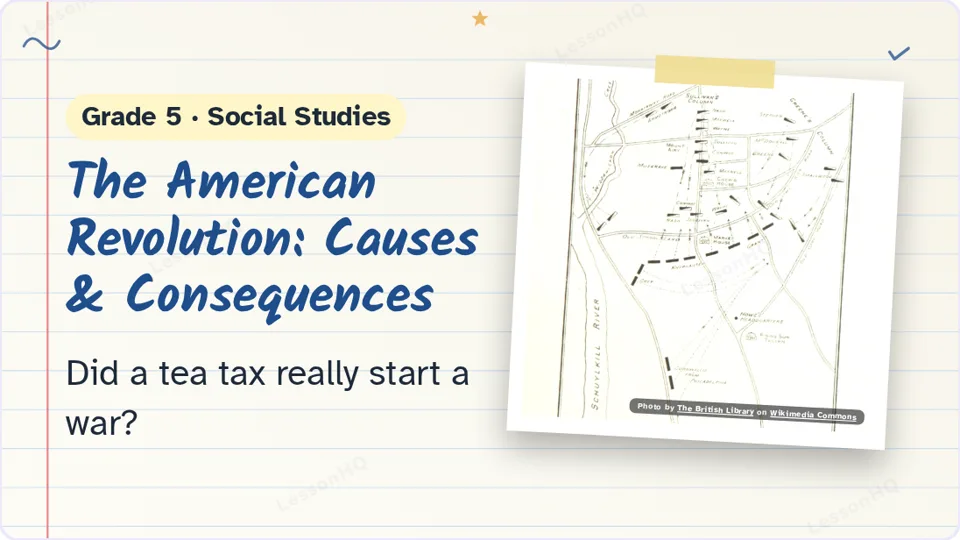
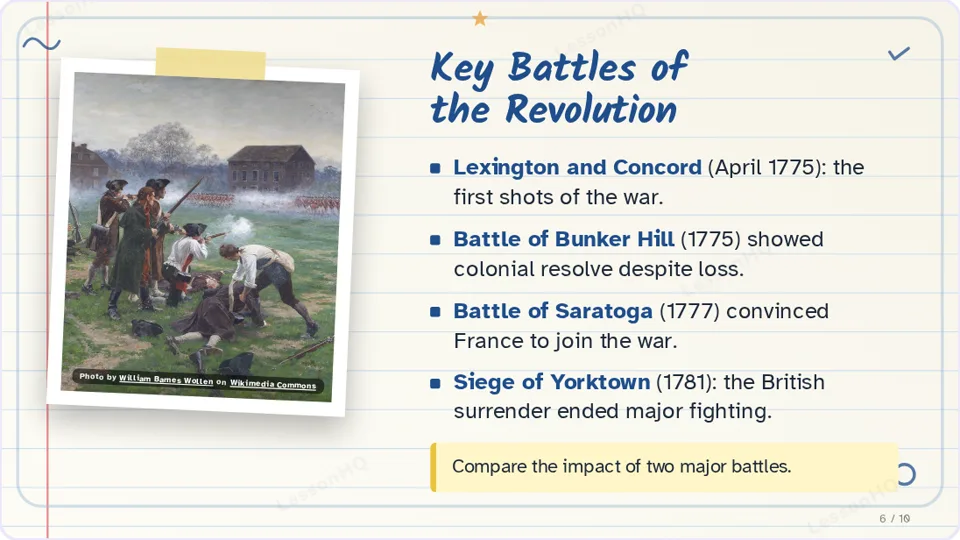
Teaching World War I in AP World History
World War I (1914-1918) is one of the central events in AP World History: Modern. Students study it as the first truly global industrial war, one that pulled in European empires, their colonies, the Ottoman Empire, Japan, and eventually the United States. The course asks students to look beyond the battlefields of Western Europe and consider how the war reshaped empires, economies, and societies around the world.
The topic matters because it connects several major course themes: the rise of nationalism, imperial rivalries, industrial technology applied to warfare, and the collapse of long-standing empires. It also sets up later topics, including the Russian Revolution, the interwar period, the Great Depression, anti-colonial movements, and World War II. Students should be able to explain causes, describe how the war was fought and experienced, and evaluate its long-term effects, using specific evidence.
Key ideas
Long-term causes
Nationalism, imperial competition, militarism, and a system of alliances all raised tensions in Europe before 1914. The major alliances were the Triple Entente (Britain, France, Russia) and the Triple Alliance (Germany, Austria-Hungary, Italy).
The immediate trigger
The assassination of Archduke Franz Ferdinand of Austria-Hungary in Sarajevo in June 1914 led Austria-Hungary to confront Serbia. Alliance commitments then widened a regional crisis into a continental war.
A global war
Fighting occurred in Europe, the Middle East, Africa, and East Asia and the Pacific. Colonies supplied soldiers, laborers, and resources to European powers, and the Ottoman Empire joined the Central Powers.
Industrial and total war
Machine guns, artillery, poison gas, submarines, tanks, and airplanes made the war extremely deadly. Governments practiced total war by mobilizing their economies, controlling industry, using propaganda, and drawing many women into war work.
Stalemate on the Western Front
Trench warfare produced long stalemates and enormous casualties with little territorial change. Russia, by contrast, suffered heavy strain on the Eastern Front, which contributed to revolution in 1917.
Ending the war
Russia left the war after its revolution, and the United States entered in 1917, partly in response to German unrestricted submarine warfare. Germany and the Allies signed an armistice in November 1918.
Consequences
The Treaty of Versailles blamed Germany and imposed reparations. The Austro-Hungarian, Ottoman, German, and Russian empires collapsed, and new states appeared. Former Ottoman lands in the Middle East became mandates under Britain and France, which fueled resentment and anti-colonial movements.
Key vocabulary
- Nationalism
- Strong loyalty to a nation or ethnic group, which can unify a people or fuel rivalry and demands for independence.
- Militarism
- The build-up of armed forces and the belief that military strength should guide national policy.
- Triple Entente
- The alliance of Britain, France, and Russia before and during the war.
- Central Powers
- The wartime coalition led by Germany and Austria-Hungary, joined by the Ottoman Empire and Bulgaria.
- Total war
- A conflict in which a state mobilizes its whole economy and society for the war effort.
- Trench warfare
- A style of fighting from fortified ditches, common on the Western Front, that favored defense.
- Treaty of Versailles
- The 1919 peace settlement with Germany that assigned blame for the war and required reparations.
- Mandate
- A territory formerly held by a defeated power and administered by a victorious power after the war under the League of Nations system.
Common misconceptions
- Error: The assassination of Franz Ferdinand alone caused the war. Fix: It was the trigger. Underlying causes such as alliances, nationalism, militarism, and imperial rivalry explain why a regional crisis became a world war.
- Error: World War I was only a European conflict. Fix: Colonial troops and laborers took part, battles occurred in several regions, and the war reshaped the Middle East, Africa, and Asia.
- Error: The war ended because the United States won it single-handedly. Fix: The United States entered late and added fresh resources, but the war was decided by the efforts of many nations over four years.
- Error: The Treaty of Versailles settled all postwar issues peacefully. Fix: Many people in Germany resented it, and new borders and mandates created lasting disputes.
What the exam asks for
- Explaining causes and effects, including distinguishing long-term causes from immediate triggers.
- Analyzing primary sources such as posters, speeches, and maps for point of view, purpose, and historical context.
- Comparing the war's effects on different regions or empires.
- Writing an argument supported with specific historical evidence, as in the long essay question.
Practice questions with answers
Name two long-term causes of World War I and explain how one contributed to the outbreak of war.
Possible causes: nationalism, militarism, imperial rivalry, alliance systems. Example: alliances meant that a conflict between Austria-Hungary and Serbia drew in Russia, Germany, France, and Britain.
Describe one way World War I was a global war rather than only a European one.
Colonies supplied soldiers and laborers to European powers, the Ottoman Empire fought as a Central Power, and fighting took place in the Middle East, Africa, and East Asia and the Pacific.
Explain what is meant by total war, giving one example from World War I.
Governments mobilized their whole societies and economies for war. Examples: controlling industry, using propaganda, rationing, or bringing women into factory work.
Write a response evaluating the extent to which World War I changed the political world between 1914 and the early 1920s.
A strong response takes a position and supports it with evidence. Points: the Austro-Hungarian, Ottoman, German, and Russian empires collapsed; new states emerged in Europe; Britain and France took mandates in former Ottoman lands; the Russian Revolution brought a communist government; the Treaty of Versailles imposed reparations and blame on Germany; the United States became more prominent. Continuity: European powers kept colonial empires, and many borders and rivalries persisted. Anti-colonial movements grew partly because colonial peoples had contributed to the war. The response should weigh change against continuity and reach a clear judgment.
Make any AP World History resource on World War I
Pick what you need - the AI builds it for AP World History and keeps everything consistent if you generate more.
World War I lesson plans
World War I worksheets
World War I study guides
World War I slides
World War I test prep & review
World War I activities
World War I practice test
AP World History: World War I - FAQ
Are these resources aligned to the AP World History framework?
Yes - every resource on World War I is written for the AP course framework - with exam-style free-response and the scoring guidelines in mind. It is pitched for High School (Grades 9-12) and the demands of the AP exam.
What can I make for World War I?
A full lesson on World War I - slides, a lesson plan, a worksheet with an answer key, a study guide, review practice, an exit ticket and a self-grading practice test - each generated in about 60 seconds.
Are the World War I resources editable?
Yes. Slides open in Google Slides or PowerPoint and documents open in Word or Google Docs, or save as a PDF - fully editable and yours to keep.
Is it free?
You can start free with no credit card. Generate a AP World History lesson on World War I and see the quality for yourself.
Teach World War I tomorrow.
A full AP World History lesson in 60 seconds - free to start, no credit card.